






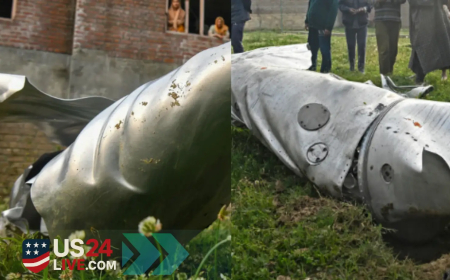











U.S. Airstrikes on Iran’s Nuclear Sites Spark Debate Over Long-Term Impact
President Trump declared a sweeping victory after U.S. airstrikes targeted Iran’s nuclear facilities, but experts caution the damage may only delay—not dismantle—Iran’s nuclear ambitions.
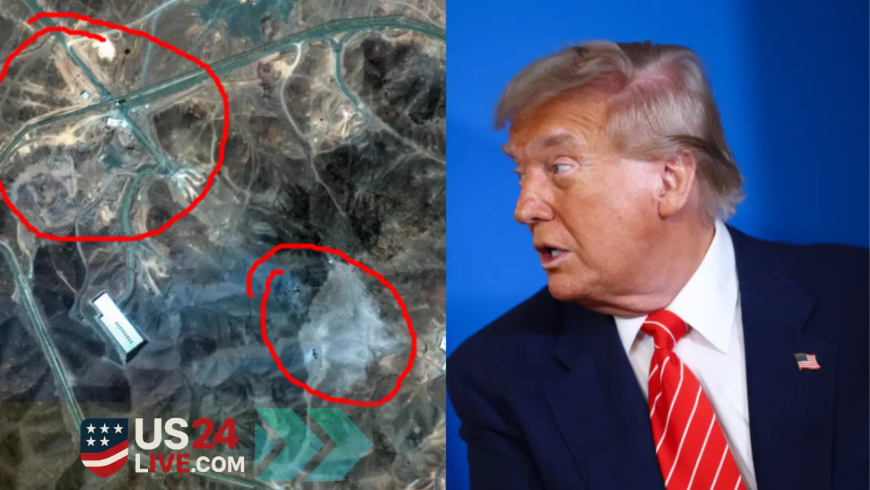
A fierce debate has reignited over the effectiveness of U.S. airstrikes on Iran’s nuclear infrastructure following President Donald Trump’s bold assertion that the June 21 strikes “completely and totally obliterated” Iran’s ability to enrich uranium for weapons. The statement, posted shortly after the strikes, has drawn scrutiny from analysts, lawmakers, and intelligence officials who suggest the reality may be far more complex.
While both the U.S. and Israeli air forces reportedly coordinated precision strikes on multiple Iranian nuclear facilities, experts remain skeptical about whether airstrikes alone can permanently derail Iran’s nuclear ambitions. “The idea that you can eliminate an entire nuclear program from the air has never held up under scrutiny,” said Corey Hinderstein, former head of nonproliferation programs at the National Nuclear Security Administration and current VP at the Carnegie Endowment for International Peace. “We simply don’t have enough information to confirm the program is gone.”
Secretary of Defense Pete Hegseth backed the president’s claims, telling CNN that Iran’s nuclear weapons capability had been “obliterated.” Yet members of Congress briefed on the aftermath received mixed assessments. Rep. Mike Quigley (D-IL), who sits on the House Intelligence Committee, reminded the public that ground forces—not air power—are historically necessary to end such programs. “We’ve always been told it would take boots on the ground, and for a long time,” he said.
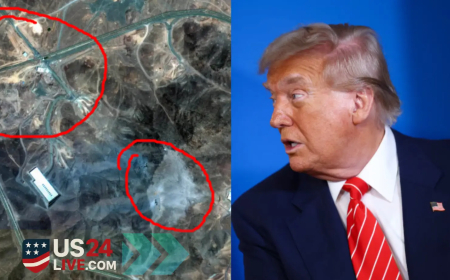
Iran has admitted to damage at some facilities but may still possess operational enrichment capabilities. Intelligence suggests that an underground site at Pickaxe Mountain near the Natanz plant could be deeper and more fortified than the well-known Fordow facility, which sustained heavy damage during the airstrikes. Pickaxe Mountain was first exposed publicly in 2023 and may still house equipment for uranium enrichment.
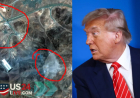
Satellite imagery leading up to the attack showed transport activity near Fordow, raising concerns that some of Iran’s estimated 880 pounds of highly enriched uranium may have been moved. Lawmakers including Rep. Michael McCaul (R-TX) have pressed for a full accounting. “We need to know exactly where that uranium is,” McCaul said, “and that requires Iran to come to the table.”
However, Tehran’s willingness to negotiate appears limited. On June 25, Iran’s Guardian Council passed a law halting all cooperation with the International Atomic Energy Agency (IAEA), citing the need to protect “the safety and security” of its nuclear operations. This move marks another setback in global nonproliferation efforts, especially given Iran’s obligations under the Nuclear Nonproliferation Treaty.
Despite strong rhetoric from Washington, many within the intelligence and academic communities argue that while the strikes may have delivered a tactical blow, they are unlikely to yield strategic results without diplomacy. The fate of Iran’s nuclear ambitions remains unresolved—and the world waits to see whether confrontation or negotiation comes next.
What's Your Reaction?
 Like
0
Like
0
 Dislike
0
Dislike
0
 Love
0
Love
0
 Funny
0
Funny
0
 Angry
0
Angry
0
 Sad
0
Sad
0
 Wow
0
Wow
0