















Federal Judge Declines to Halt Immigration Raids at Religious Sites
A U.S. District Court judge has denied a legal request by religious organizations to prevent immigration enforcement at houses of worship. The decision marks a pivotal moment in the ongoing debate over sanctuary spaces and federal immigration policy.
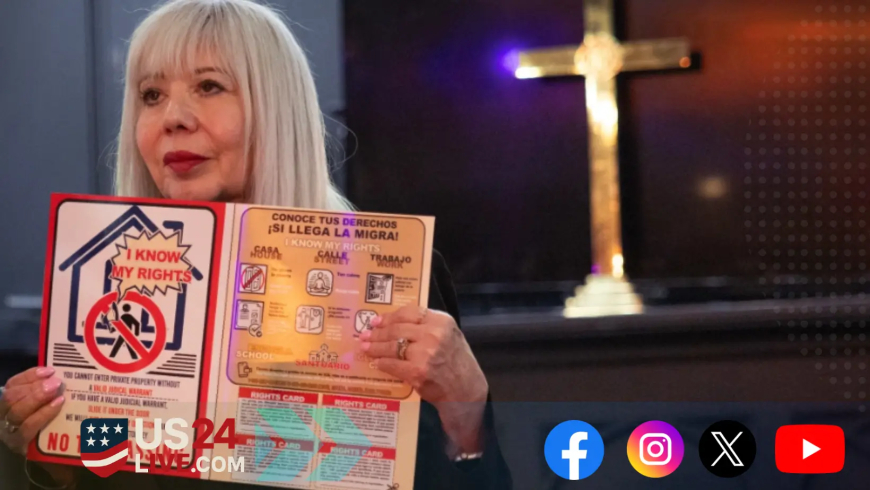
In a significant decision affecting faith-based institutions across the United States, a federal judge in Washington, D.C., has rejected a request to block immigration agents from conducting enforcement actions at houses of worship. The lawsuit, brought forward by over two dozen Christian and Jewish groups, challenged a controversial shift in immigration policy introduced by the Trump administration.
U.S. District Judge Dabney Friedrich ruled that the plaintiffs had not presented enough evidence of imminent legal harm to warrant a preliminary injunction. In her written opinion, Judge Friedrich—appointed during Donald Trump’s first term—stated that there was no compelling indication that religious spaces were being unfairly targeted.
“At least at this juncture and on this record, the plaintiffs have not made the requisite showing of a ‘credible threat’ of enforcement,” Friedrich wrote. “Nor does the present record show that places of worship are being singled out as special targets.”
The controversy stems from a January 20 directive that removed previous Department of Homeland Security (DHS) restrictions on immigration arrests in designated “sensitive locations” such as churches, synagogues, and mosques. Under the new guidelines, field agents are permitted to use their discretion to carry out enforcement actions at religious venues without supervisory approval.
Religious organizations argue that this move undermines decades of federal practice that respected places of worship as off-limits for immigration enforcement. Attorneys representing the plaintiffs cited a 30-year-old tradition of treating religious institutions as sanctuaries from government action.
While this case was denied in Washington, it’s part of a broader legal landscape. In February, a federal judge in Maryland sided with a coalition of Quaker and interfaith groups and temporarily blocked the administration’s enforcement at religious sites—though the order applied only to those plaintiffs. Conversely, a Colorado judge upheld the administration’s right to reverse protections regarding immigration arrests in schools.
The latest ruling underscores the complex balance between national immigration enforcement priorities and the longstanding belief that houses of worship should be safe havens.
Legal experts expect the decision to be appealed, potentially escalating the case to higher courts. Meanwhile, religious groups say they remain committed to protecting the sanctity of their spaces and the communities they serve, especially as immigration policies continue to evolve.
What's Your Reaction?
 Like
0
Like
0
 Dislike
0
Dislike
0
 Love
0
Love
0
 Funny
0
Funny
0
 Angry
0
Angry
0
 Sad
0
Sad
0
 Wow
0
Wow
0